Thirty Seconds to Decide: The Uneasy Rise of the Shot Clock in Casual Pool
Photo: Unknown, CC BY-SA 4.0, via Wikimedia Commons
It is 9:40 on a Tuesday night at a bar with two tables, a chalkboard bracket, and a phone propped up near the register. The tournament director taps the screen. A soft countdown appears: 30 seconds per shot, one extension per rack. The room does not exactly go silent, but something shifts. Players stand a little straighter. Conversations drop half a decibel. The clock is here, and everybody knows it.
Timed pool nights are not brand-new in 2026, but they are spreading in a very specific way. They are no longer just a television production trick or a rule for elite events. They are showing up in local bar tournaments, in league play, and in casual rooms trying to fit more matches into a weeknight. The pitch is simple: fewer five-minute negotiations over a routine shot, more actual pool. The reality is messier, because a clock does not just speed up the game. It changes the mood of the room.
The Clock Changes More Than Pace
On paper, a shot clock is a housekeeping tool. In practice, it is a personality test. Some players become decisive and sharp. Others start hearing the countdown in their sleep. A player who normally walks the table, checks the angle twice, and settles in slowly can suddenly feel like the room is tapping its foot.
That pressure is not imaginary. Pool already asks players to make geometric decisions with incomplete information. Add a visible timer and you introduce a second opponent: the clock. You are no longer just asking whether the cut is makeable. You are asking whether you can commit to the shot before the number runs out. For some players, that urgency is clarifying. For others, it is a fast track to a rushed stroke and a scratched cue ball.
Why Some Regulars Love It
Supporters of timed nights tend to make a practical argument. A local tournament that once dragged past midnight can finish before the bar staff starts stacking chairs. League matches move along. Newer players get more turns instead of watching one veteran circle the table like he is solving a riddle. The clock also cuts down on accidental stalling, whether real or perceived.
There is a social benefit too. A shot clock gives the room a shared rhythm. Players stop drifting between shots and start playing in something closer to a wave. In a busy room, that can make the night feel livelier rather than longer. It can also reduce the awkwardness of wondering whether someone is slow-playing on purpose. The timer does not accuse anyone. It just keeps moving.
Why Others Call It Heresy
The resistance is just as understandable. Pool has always been a game of pauses. The walk around the table, the second look at the angle, the quiet decision to play safe instead of forcing a hero shot: those moments are part of the craft. A clock can make deliberation feel like a defect.
Some regulars also worry that timed pool rewards speed over thought. A fast player with a mediocre plan can look more confident than a thoughtful player who uses most of the clock. In casual settings, that can tilt the room toward a style of play that feels less like chess and more like a race. And when the rules are vague, the clock becomes another thing to argue about. Does it start when the player approaches the table or when the balls stop rolling? Is there an extension? Who calls time? A badly run shot clock can create more friction than it removes.
How to Play Fast Without Panicking
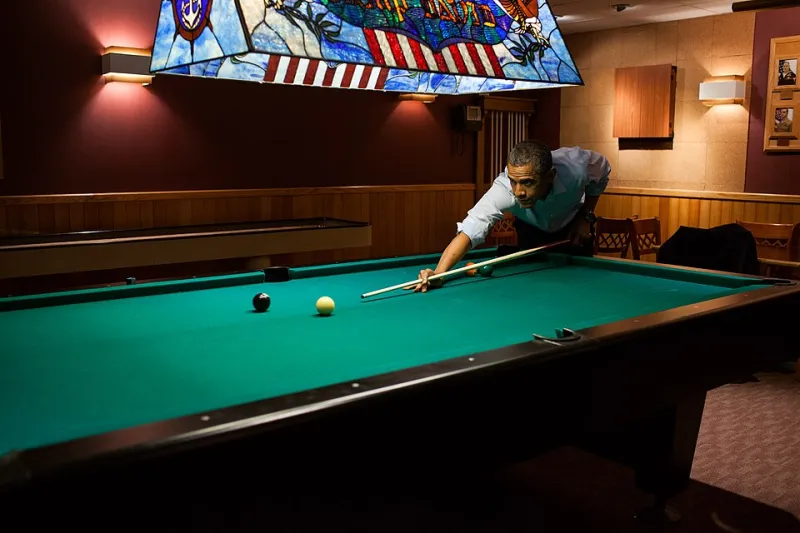
The good news is that adapting to a shot clock does not mean abandoning your brain. It means moving your thinking to the right part of the shot. Most of the decision-making should happen before you get down on the cue. Read the table, pick the pocket, choose the speed, and identify your cue ball path while you are still standing. Then trust the stroke.
A simple routine helps. Stand behind the shot. Take one full look at the line. Decide whether you are shooting or playing safe. If you are shooting, commit to speed and spin before you bend over. If the clock is running low, do not abandon fundamentals. A rushed warm-up stroke is still a bad warm-up stroke. Use your extension early if the rules allow one. Do not save it for a shot you have not even seen yet.
It also helps to remember that the clock is information, not an insult. You are not being told to hurry because the room hates you. You are being told how much time the format gives everyone. Treat it like a rule of the game, not a comment on your character.
The Rules Matter as Much as the Timer
For room owners and league organizers, the success of timed pool depends on clarity. Put the timer somewhere visible. Announce the format before the first rack. Explain when the clock starts, how extensions work, and what happens if time expires. Apply the rule consistently to every player, including the regulars who have been shooting there for a decade. A shot clock without consistent enforcement is just a suggestion, and suggestions do not survive a close match.
A fair experiment does not have to be a permanent verdict. Some rooms might use timed play for bar brackets and leave league nights alone. Others might try a 45-second clock and discover that it is the sweet spot. The point is not to make pool frantic. The point is to see whether a little structure makes the night better for everyone at the table.
In 2026, the shot clock is still dividing local rooms because it touches something personal: how each player experiences time. Some feel liberated by the tick. Some feel rushed. Both reactions are honest. The trick is to adapt without losing the calm that makes a good shot possible.