Before You Drop a Quarter: A Five-Minute Audit for Any Pool Room
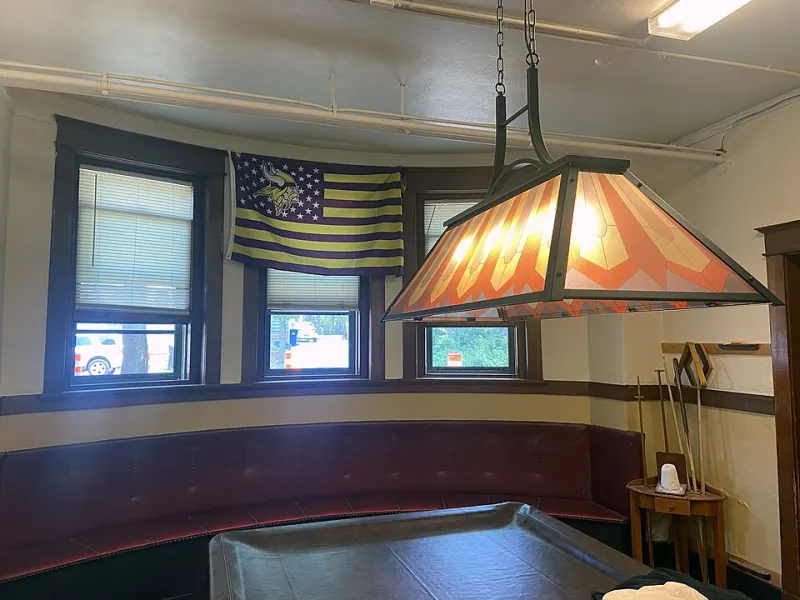
Photo: Myotus, CC BY-SA 4.0, via Wikimedia Commons
You walk into a new bar or pool hall, and the first thing you see is the table. It looks fine. Maybe even good. The felt is smooth, the pockets are intact, and the light is on. You are about to drop a few quarters or pay for an hour of table time. But five minutes of inspection can save you an entire night of fighting your equipment.
The corner pocket test is not about finding the most expensive room in town. It is about reading the small signals that separate a room that cares from a room that just happens to own a table. Here is a quick audit you can run before you pay.
1. Look at the Cue Rack, Not Just the Table
A house cue is a confession. Pick up two or three from the rack and check the tip. A well-maintained room will have tips that are neither flattened into a wafer nor cracked down the side. Roll the cue on the table or hold it up to the light. If it wobbles like a fishing rod, put it back. If every cue in the rack has a dead tip or a missing bumper, that tells you the room treats equipment as a rental, not a craft.
Also look at how the cues are stored. A rack with cues leaning against a wall and tips touching the floor is a bad sign. A simple wall rack is not fancy, but it shows that someone thought about the tools.
2. Check Chalk Access and What It Says About the Room
Chalk is cheap, which is exactly why it is revealing. Are there chalk cubes on every table, or do you have to hunt behind the register? Is the chalk worn down to a nub, or is it fresh enough to actually grip? Is there a chalk bowl, a tray, or a little shelf on the rail? These are small details, but they tell you whether the room expects players to actually play.
Look around the table for chalk dust. A little is normal. A thick layer on the rails and carpet suggests the room has not been cleaned in a while. A spotless table with no chalk anywhere might mean the room is more interested in looking the part than supporting the game.
3. Read the Light, Not Just the Brightness
The light directly above the table should illuminate the whole playing surface, not just the center. Stand at one corner pocket and sight down the rail. Do you see dark patches near the pockets? Does the light cast a shadow from your own cue onto the shot line? Is there glare bouncing off the cloth into your eyes?
Good lighting is not about being blinding. It is about being even. If the table has a low-hanging lamp, check whether the shade is crooked or the bulbs are mismatched. If one side of the table is noticeably dimmer, you will be guessing on half your shots. That is not a challenge. That is a defect.
4. Walk the Spacing Before You Rack
A table can be perfectly level and still be a bad table to play on if there is no room to stroke. Walk around all four sides. Can you take a full backswing without hitting a chair, a column, or the wall? Is there a high-top table close enough to catch your elbow? Are the tables so close together that you have to ask permission to stand behind your own shot?
This matters more in bars than in dedicated halls. A room with two tables squeezed into a corner might be fine for a casual game, but it will be miserable for any shot that requires a rail bridge or a long cue. Spacing is part of the table. If the room did not plan for it, you will feel it all night.
5. Ask About House Rules and Price Before You Pay
House rules are not just the fine print. They tell you what kind of room you are in. Is it coin-op, pay-by-the-hour, or a flat rate per person? Are reservations accepted on league nights? Do they allow jump cues, break sticks, or only house equipment? Is there a dress code, a drink minimum, or a rule about food on the rails?
You do not need a legal brief. A quick question at the counter is enough. If the person behind the bar cannot explain how table time works, that is a signal. If the rules are posted and clear, that is a good one. The best rooms are not necessarily the fanciest. They are the ones where you know what you are paying for before the first rack.
The Corner Pocket Test
Before you commit, stand at the corner pocket and look down the length of the table. Check the rail for level. Check the cloth for tears or stains near the pockets. Check the light for shadows. Then look back at the room. Are the cues straight? Is there chalk? Can you stand behind your shot? Do the rules make sense?
A good pool room does not have to be perfect. It has to be honest. The table should be playable, the equipment should be usable, and the price should be clear. Five minutes of inspection will not guarantee a great night, but it will keep you from paying for a bad one.