The Jukebox Has a Tell: Reading the Room Through Its Music
Photo: classic jukebox glowing in a dim American pool hall with billiard tables in background, via www.mbgrand600.com
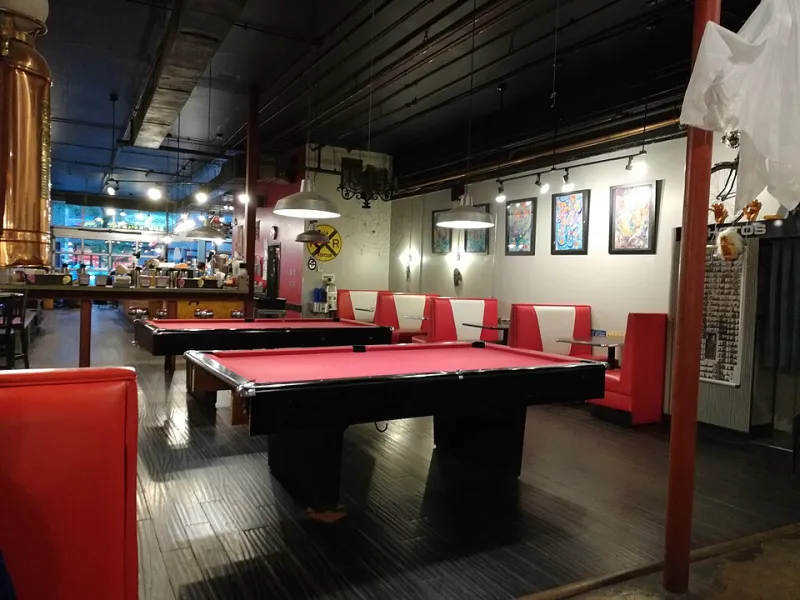
Walk into a pool hall and you can learn a lot before anybody racks a ball. The felt tells you how much the room cares. The cue rack tells you who has money. The people tell you whether you are early or late. But the music tells you something else. It tells you what kind of night this is going to be.
A pool hall soundtrack is never neutral. It is a mood, a claim, a clock, and sometimes a warning. The jukebox has a tell.
The First Three Songs Tell You Where You Are
A serious room often has a low, steady soundtrack. Classic rock, blues, jazz, or something instrumental enough to disappear under the click of balls. A neighborhood bar box might be louder, faster, and more interested in keeping the room awake. A league night has its own rhythm: songs that people know, songs that make somebody sing the wrong line, songs that get the whole table laughing before a shot.
The first three songs are usually enough to place the room. If the music is fighting the game, you notice. If it is carrying the game, you stop noticing at all. That second feeling is the goal. A good pool hall soundtrack does not demand attention. It gives the room a pulse.
Jukebox Politics: Who Gets the Aux, and What It Costs
The jukebox is one of the last truly democratic pieces of bar technology. Anybody with a dollar and a song in mind can shape the next twenty minutes. That is also the problem.
There is an unwritten etiquette to it. You do not queue twelve songs in a row unless you are trying to make a point. You do not play a song that is twice as loud as everything else just because you love it. You do not wait until the final rack of a tense match to drop a comedy track. And you do not ask the bartender to turn it down unless the room has clearly lost the plot.
The regulars know this. The newcomers learn it quickly. The guy who ignores it becomes a story.
The Guy Who Queues Twelve Songs
Every pool hall has one. He arrives, walks straight to the jukebox, and treats it like a personal radio station. Maybe he is lonely. Maybe he is territorial. Maybe he just really loves the band. Whatever the reason, his queue changes the room.
There is a version of this that works. If the songs fit the night and the room is loose, a long queue can feel like a gift. A regular who knows the crowd can keep a bar box humming for an hour without anyone touching the machine. That is a kind of hosting.
The bad version is obvious. The music becomes a monologue. The room stops talking. The bartender starts wiping the same spot on the counter. At that point, the jukebox is no longer a jukebox. It is a leash.
Silence Is a Song Too
Here is where a lot of casual players get it wrong. They assume a pool hall should always have music. But the most intense moments in a room often happen when the soundtrack drops out.
The final rack. The hill-hill match. The shot that decides whether a team goes home happy or quiet. In those moments, the jukebox can feel like an intruder. A good room adjusts. Somebody turns the volume down. Somebody waits before feeding the machine. The silence becomes part of the tension.
That is not a rule you will find on a sign. It is a feeling that regulars protect. Silence says: this one matters. Music can say the same thing if it is used right. The trick is knowing which one the room needs.
How Regulars Use Music to Claim Territory
Music is one of the quiet ways regulars mark a room. A group that always plays the same corner table may also always play the same kind of music. A player who likes a slow, steady warm-up might queue the same three songs before a league match. A bar owner who wants a lively night will feed the jukebox early and often.
None of this is accidental. The soundtrack sets the social temperature. A fast song invites movement and chatter. A slow song makes people lean in. A song everybody knows can break the ice between strangers. A song nobody knows can make a room feel private. Regulars use those cues without ever saying so.
What the Soundtrack Says About the Room
A dive bar with a single bar box and a jukebox held together with tape is telling you to relax. A pool hall with a streaming playlist and a volume knob behind the counter is telling you that the room is managed. A league night with a mix of country, hip-hop, rock, and somebody's cousin's band is telling you that the crowd is a blend, and the music is trying to keep up.
None of these are better than the others. They are just different signals. The room you are in is always explaining itself. The music is part of the explanation.
Reading the Room Before You Press Play
If you are new to a pool hall, watch before you queue. Listen to what is already playing. Check the volume. See whether people are singing along or leaning into their shots. If the room is locked in on a match, wait. If the room is loose, join in. If the jukebox is already dominated by a guy with a twenty-dollar bill and a dream, let him have it.
The best pool hall soundtrack is not the one you would choose. It is the one the room needed. Play your part, stay aware of the final rack, and remember that silence can be the best song in the building.
At 7Ball Corner, we spend a lot of time talking about shots, strategy, and the people who play them. The music is part of that story too. Listen closely and you will hear the room talking back.