Seven Silent Ways to Hand Over a Match You Were Winning
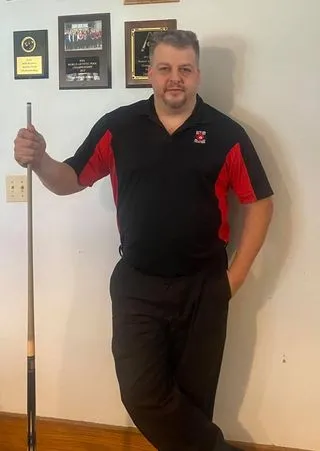
Photo: Unknown, CC BY-SA 4.0, via Wikimedia Commons
Potting balls is the easy part to practice. You can drill cut shots for a month, learn to hold the cue ball on a string, and still walk out of the room with a losing scorecard and no idea why. Most casual matches in the US aren't settled by who makes the most balls. They're settled by who hands the table away the fewest times.
Here are seven ways players with perfectly good strokes keep gifting matches to opponents who don't shoot any better than they do.
1. You Never Asked Where the Cue Ball Was Going
The object ball is the punchline. The cue ball is the setup, and it's the part most casual players skip. You cut in the 3, feel great about it, and then watch the cue ball drift three rails into the middle of the cluster you needed to avoid. The shot counted. Your turn ended anyway.
Before you get down on a ball, pick a landing zone the size of a dinner plate for the cue ball. If you can't name one out loud, you're not aiming at anything — you're hoping.
2. You Played the Shot You Saw First
There's usually a shot that jumps out at you within two seconds of walking to the table, and it's usually the wrong one. It might be the longest cut, the thinnest edge, or the one that requires perfect speed. Meanwhile, a boring little stun shot to the side pocket is sitting there unconsidered.
Give yourself the full walk-around. Even ten seconds of looking from the other side of the table will surface options your first glance never showed you.
3. You Treated a Safety Like a Forfeit
Somewhere along the way, casual players decided that playing safe means you gave up on the rack. That's backwards. A well-played safety doesn't just avoid losing — it puts your opponent in a spot where they have to manufacture something difficult.
Roll the cue ball up behind the 9 so they're kicking at it from the rail. Send the cue ball to the far end of the table and leave them a thin cut with no angle. You don't need to be a technician. You just need to be willing to make their next shot worse than yours.
4. You Parked Their Out Ball Next to a Pocket
The slowest way to lose a rack is to spend it moving your opponent's balls closer to the holes. It happens all the time: you miss a safety, the cue ball caroms off the 6, and now their easiest ball is sitting six inches from the corner pocket, waiting politely.
When you can't run out, your job is to leave their balls ugly. Any shot that nudges their money ball toward the jaws is a gift, no matter how nice your own leave looked.
5. You Ran Your Balls in the Order That Felt Good
There's a comfortable order to clear a table — nearest ball first, then the next nearest — and it will betray you the moment the 8 ends up blocked by a ball you should have moved two shots ago. Good pattern play runs backwards. Figure out where the last three balls need to be, then work out how to get there.
If you only plan one shot ahead, you're basically letting the table write the ending for you.
6. You Chased the Highlight Because the Table Felt Easy
You're up a few racks, the felt is rolling fast, and suddenly a four-ball combination looks like a great idea. It isn't. Neither is the jump shot you've never practiced, or the draw shot you saw someone hit on a highlight reel last week.
The highlight shot is a low-percentage bet dressed up as confidence. When you're ahead, the smartest thing on the table is the shot you can make nine times out of ten.
7. You Played the Scoreboard Instead of the Table
Up four to one, and suddenly you're playing careful, cautious, scared pool — poking at shots instead of stroking them. Down four to one, and you're swinging at everything because the lead feels too big to close. Both reactions come from looking at the score instead of the layout in front of you.
Every rack starts at zero. The only thing the scoreboard should change is your willingness to play safe when you're ahead — not your stroke.
The Common Thread: Free Shots
None of these seven mistakes involves missing a ball. Every one of them hands your opponent a free shot, a free angle, or a free pocket. Stack enough of those together and a player with half your potting skill beats you comfortably.
A Cheap Audit for Next League Night
Try this for one session: after each rack, write down a single line — what gave the table away. Not "I missed the 5," but "cue ball went into the cluster" or "left the 9 hanging." After four or five racks you'll see a pattern, and it's usually just one or two habits doing all the damage.
Fix those first. The fancy shots can wait until you stop donating turns.