The Ball That Drains Your Wallet: Why the 7 Costs Casual Players More Than They Think

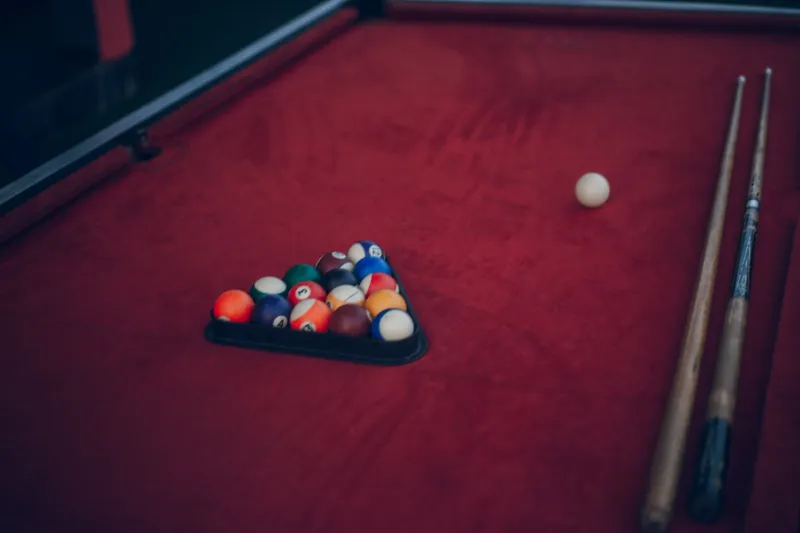
Photo: Kurt Kaiser, CC0, via Wikimedia Commons
Ask a casual pool player what costs them the most money at the table, and you'll hear all kinds of answers. A scratched eight-ball. A busted break. Maybe a hustler who made everything look tougher than it was. Almost nobody says the 7-ball. And that's exactly the problem.
The 7 sits right in the middle of the rack, looking harmless. It's not the money ball. It's not the one you're supposed to sink last. But in league play, friendly games, and especially in wagered matches, the 7-ball has a sneaky way of becoming the most expensive ball on the felt. The players who've learned this the hard way will tell you — usually after the fact, usually over a beer they didn't want to buy.
Why the 7 Is Different From Every Other Ball
Here's the thing about the 7-ball that doesn't get talked about enough: it almost always ends up in a position that creates a decision point. It's rarely the ball you run first, and it's rarely the last one standing. It lives in the middle of your run, which means it demands that you think about what comes after it — and most casual players simply don't.
Seasoned players in league circuits describe it as a "traffic cop" ball. It controls the flow of a run. If you approach it from the wrong angle, your cue ball ends up out of position for the next two or three balls. If you sink it carelessly, you've essentially handed your opponent a roadmap to beat you. The 7 doesn't beat you directly — it just sets up everything that does.
Regulars at pool halls across the country — the kind of guys who've been playing Thursday night leagues for a decade — will tell you the same story in slightly different words: they didn't start winning consistently until they stopped treating the 7 like just another solid or stripe and started treating it like a strategic pivot point.
What the Numbers Actually Show
League tracking data from organized amateur circuits paints a pretty clear picture. In matches where a player leaves themselves in a bad lie after pocketing the 7-ball, they lose the subsequent rack at a significantly higher rate. We're not talking about a small margin — players who report tracking their own stats informally on apps and spreadsheets have noted that poor 7-ball positioning correlates with run-ending sequences more often than any other single ball in the rack.
The financial hit compounds fast in betting scenarios. Friendly games that run $5 or $10 a rack don't sound like much, but in a four-hour session where you're dropping every third rack because of a misplayed 7, you're looking at real money leaving your pocket. Players who frequent pool halls in cities like Chicago, Houston, and Phoenix — where bar table action is common and side bets are casual but constant — often talk about "bleeding out" over a session without ever being badly outplayed. That slow bleed usually traces back to positional errors, and the 7 is the most common culprit.
One forum thread on a popular billiards subreddit had players tallying their session losses by root cause. The responses were telling. Misplayed position on mid-rack balls, and specifically on the 6-7-8 sequence, came up again and again. The 7 kept appearing as the hinge point where good runs fell apart.
The Betting Table Psychology
There's also a psychological angle here that costs players money before they even take a shot. When you're running a rack in a wagered game, your opponent is watching your cue ball placement obsessively. If you pocket the 7 and leave yourself in an awkward spot, you've telegraphed weakness. A smart opponent knows your next shot is going to be tough. That knowledge affects how they respond, how they bet on the next rack, and how they approach their own game.
It's a confidence drain that compounds. You know you're out of position. They know you're out of position. And suddenly a game that was neck and neck has shifted — not because of skill, but because of one careless moment with a striped or solid ball that everyone was ignoring.
Hustlers and experienced money players are well aware of this. They specifically watch how recreational players handle the 7 as a tell. If you blow through it without thinking, they know you're not planning more than two balls ahead. That tells them everything they need to know about your ceiling as an opponent — and about how to bet against you.
How to Stop Paying the 7-Ball Tax
The fix isn't complicated, but it does require a mental shift. Before you even line up on the 6, you should already know where you want the cue ball to land after the 7. That's the whole game. Not just the shot in front of you — the shot after the shot.
Practice drills that isolate the 6-7-8 sequence are worth your time. Set them up, run them slowly, and focus entirely on cue ball position after the 7 drops. Do this enough times and it becomes automatic. You stop thinking about the 7 as a destination and start thinking about it as a launching pad.
The players who've cracked this tend to say the same thing: once they started treating the 7 like a cue ball management exercise rather than just another pocket, their run percentages went up and their session losses went down. Not because they suddenly became pros, but because they stopped paying the quiet tax that the 7 had been collecting on every rack.
The Bottom Line
Pool is a game of chains. Every shot sets up the next one, and every mistake costs you something — sometimes a rack, sometimes money, sometimes just momentum. The 7-ball sits at the heart of that chain in a way most casual players never fully appreciate until they've dropped enough cash to make it obvious.
Pay attention to it. Respect it. Plan for it. Because right now, if you're like most recreational players, it's costing you more than you realize — and it doesn't have to.