Small Table, Big Adjustments: The 7-Foot Reality Check Every Pool Player Needs
Photo: pool player aiming on a seven-foot bar box table in an American pool hall, via i.pinimg.com
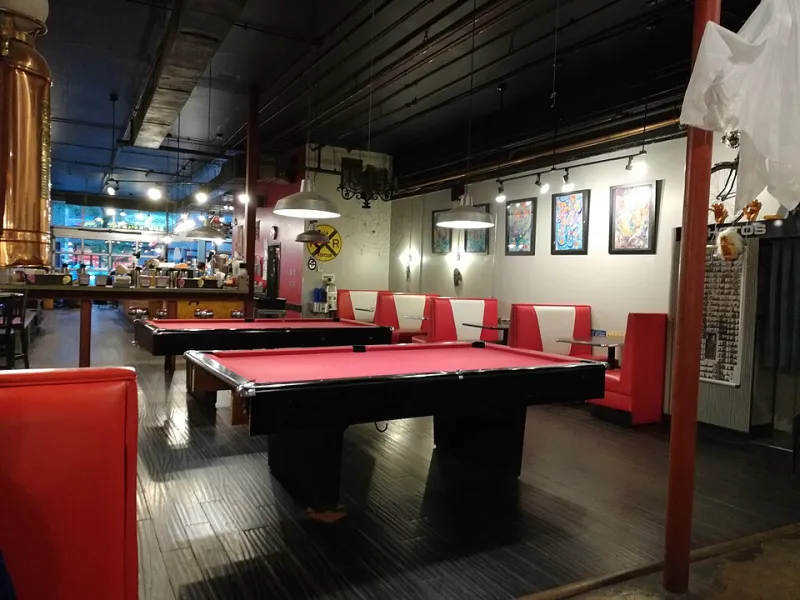
Most American pool players do not meet the game on a nine-foot tournament table. They meet it in a bar, a bowling alley, or a neighborhood tavern on a seven-foot bar box with a crowded rack and a jukebox doing its thing in the corner. That is not a lesser education. It is just a different one. The trouble starts when a player who learned on a bar box walks into a room with nine-footers and assumes the only difference is a little more walking around the table.
It is never just a little more walking.
The Bar Box Is a Different Animal
A seven-foot table compresses the game. Shots that require a smooth two-table-length stroke on a nine-footer become half-table shots on a bar box. Clusters form faster. The cue ball reaches the rail sooner. Safeties that look routine on a big table can turn into traffic jams on a small one. None of this means the bar box is easy. It means it rewards a different set of instincts.
On a nine-foot table, distance is the quiet opponent. You have more room for cue-ball travel, more space to maneuver, and more time to see a shot go wrong. On a seven-footer, mistakes happen closer to the cue tip. A slightly firm hit that would be fine on a big table can send the cue ball two rails too far on a small one. A soft safety that works on a nine-footer can leave a clean look on a bar box because there is less real estate to hide behind.
Cue-Ball Travel and the Speed Trap
The first adjustment is speed, and it is usually the one that bites hardest. Players who split time between table sizes often overhit on the bar box because their muscles remember the nine-foot stroke. Then they underhit on the nine-footer because their bar-box touch is too gentle.
A simple fix is to stop thinking in terms of 'soft' and 'firm' and start thinking in table lengths. Before you shoot, ask where the cue ball needs to stop in relation to the rails. On a seven-footer, one table length is short. On a nine-footer, the same visual distance asks for more cue. That mental shift matters more than any single tip about follow-through.
Drill it with a lag ladder. Set the cue ball on the head string and try to stop it on the foot rail, then the center diamond, then the head rail. Do it on both table sizes and log how much stroke each distance requires. Your hands will calibrate faster when you give them a clear target instead of a vague feeling.
Safeties Get Crowded
Safety play changes more than most casual players expect. A nine-foot table gives you room to play distance safeties, two-way shots, and rail-first escapes. A seven-foot table gives you congestion. Balls are closer together, angles get tighter, and a safety that leaves a long awkward look on a big table may leave a comfortable medium-range shot on a bar box.
That does not make small-table safeties weaker. It makes them more precise. You have to respect the cluster. You have to think about where the cue ball will land after contact, not just whether it touches the right ball. On a bar box, a good safety often looks less dramatic: a thin hit, a short cue-ball drift, and a rack that suddenly has no clean path to a pocket.
Break Strategy Shifts
The break is another place where table size quietly changes the plan. On a nine-foot table, players often chase a full spread and a clean look at the one ball. On a seven-footer, the rack is closer, the pockets are nearer, and control can matter more than raw power. A wild break on a bar box can send balls into traffic or scratch at a rate that makes you wonder why you swung so hard.
Try a controlled break drill on both tables. Hit ten breaks at roughly seventy percent effort and track how many leave the cue ball near the center, how many scratch, and how many leave a realistic first shot. Most players discover they do not need as much power on the small table as they thought. The goal is not to baby the break. It is to match the break to the room.
Pocket Angles and the Shelf Life of a Shot
Pocket geometry is the sneaky variable. Bar boxes and nine-footers do not all have the same pocket cut, shelf, or facing angle. A shot that feels automatic on your home table can feel strange on a league table across town. The object ball may sit differently in the jaws. The pocket may accept a thinner cut. The shelf may reject a shot that looked dead center.
When you move between tables, spend the first few minutes watching how balls behave in the pockets. Roll a few balls softly into the jaws. Notice whether the pocket wants a firm hit or a gentle one. That little calibration session saves more racks than another tip about aiming.
A Drill Plan for Players Who Split Time
The best way to handle two table sizes is to stop treating one as the real game and the other as a warm-up. Build a small comparison routine.
- Run the same straight-in progression on both tables: short, medium, long, then a cut shot from each distance.
- Play a ten-ball safety game where you must leave the cue ball behind the head string. Do it on the bar box and the nine-footer and compare how different the routes feel.
- Hit ten controlled breaks on each table and score the cue ball position, not just the spread.
- Finish with a three-rail cue-ball path drill. The bigger table will demand more stroke; the smaller table will punish sloppy speed.
Keep a short note on your phone after each session. Not a diary. Just three lines: table size, what felt fast, what felt slow. Patterns show up quickly.
The Takeaway
The seven-foot bar box is not a miniature nine-foot table. It is its own test. It asks for tighter speed control, sharper safety thinking, and a break that respects congestion. The nine-footer asks for patience, stroke, and room management. Players who bounce between both do not need to pick a favorite. They need to stop assuming the table will forgive the same habits twice.
At 7Ball Corner, that is the kind of adjustment worth talking about. The table changes. Your game should change with it.