The Most Underrated Ball on the Table: Unlocking the 7's Hidden Strategic Power
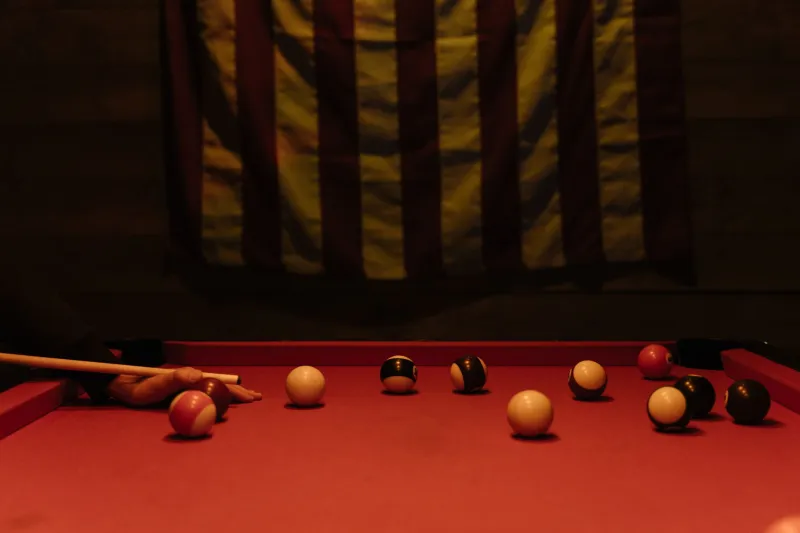
Ask a recreational pool player which ball they think about most during a game, and you'll probably hear the 8-ball. Maybe the cue ball. Sometimes the 1 or the 9 if they're playing rotation. But the 7-ball? It barely registers. It's just... there. Somewhere in the middle of the rack, blending in, waiting its turn.
That quiet anonymity is exactly what makes it dangerous — if you know what you're doing.
At 7Ball Corner, we spend a lot of time thinking about what separates players who win consistently from those who win occasionally. And one thing that keeps coming up among serious players: the 7-ball isn't just a number. It's a pivot point. A trap. A signal. Used right, it can dictate the entire rhythm of a rack.
Why the Middle Child Gets Ignored
Pool strategy tends to cluster around extremes. The low balls and high balls at either end of the numerical range get mapped out early — players identify their clusters, their easy runs, their problem balls. The 8-ball looms large as the finish line. And the cue ball, of course, is always the star of position play discussions.
The 7-ball sits right in the middle of the stripes — and that's the problem. It doesn't feel urgent. It doesn't feel like a threat. In a standard game of 8-ball, a stripes player sees it as just one more ball to clear before the money shot. In 9-ball, it's a stepping stone on the way to the 9. In either case, it tends to get handled on autopilot.
That autopilot thinking is where casual players leave serious points on the table.
The Bank Angle Nobody's Thinking About
Here's something most intermediate players don't fully appreciate: the 7-ball, by virtue of where it typically lands after the break, often ends up in positions that are ideal for cross-corner and cross-side bank shots. These aren't low-percentage desperation moves — they're precision opportunities if you've trained your eye to see them.
Because the 7 sits at the center of the stripe cluster, it frequently rolls toward the middle of the table after a solid break. That positioning, near the center or slightly off it, opens up bank angles that other balls — parked near rails or buried in clusters — simply don't offer.
Advanced players who think in terms of geometry rather than just sequence recognize this immediately. Instead of treating the 7 as just the next ball in line, they're asking: can I use this bank to reposition my cue ball for the 8? Can I play a safety here that forces my opponent into a dead-end leave? The 7-ball, precisely because of its central table presence, gives you more angular options than almost any other object ball.
Position Play and the 7 as a Checkpoint
One of the hallmarks of a player moving from intermediate to advanced is that they stop thinking one ball ahead and start thinking three or four balls ahead. In that mental framework, the 7-ball becomes a critical checkpoint — a ball whose pocket and resulting cue ball position either sets you up perfectly for the 8 or leaves you scrambling.
Smart players actually plan their run backward from the 8-ball. They decide where they want the cue ball to be for that final shot, then figure out which pocket the 7 needs to go into to get them there. That kind of reverse engineering is what separates a lucky run from a controlled one.
For stripes players specifically, the 7 often needs to be saved or sequenced deliberately — not just pocketed whenever it's convenient. Pocketing it too early can leave you with a cluster problem and no easy path to the 8. Waiting too long can mean your opponent capitalizes on a defensive mistake. The timing of when you play the 7 is itself a strategic decision.
The Psychological Angle: Using the 7 as a Mind Game
This one doesn't get talked about enough in instructional content, but experienced players absolutely use it: the 7-ball can be a psychological weapon.
Here's how it works. If you're ahead in a rack and you've got a clear shot at the 7, you don't always have to take it. Sometimes playing a deliberate safety — leaving the 7 in a position that looks makeable but isn't — puts your opponent in a mental trap. They see an open table, they see what looks like an opportunity, and they overcommit. That's when mistakes happen.
There's also the confidence signal. When a player pockets the 7 with a clean, authoritative stroke and immediately lands the cue ball in perfect shape for the 8, it sends a message. It's the same reason pitchers throw a nasty breaking ball when they could get away with a fastball — sometimes you're not just making a shot, you're making a statement.
Good players read these moments. They know when their opponent is rattled and when they're locked in. Using the 7-ball as a tempo-setter — either rushing through it or deliberately slowing down the pace — is a real psychological tool at the competitive level.
How to Start Thinking About the 7 Differently
If you want to start integrating this kind of thinking into your game, here are a few practical starting points:
Map the 7 before the rack clears. After the break, before you start running balls, locate the 7. Where is it? What angles does it offer? What pocket does it want to go into based on where the 8 is sitting? Start building your run with the 7's position as a factor, not an afterthought.
Practice 7-to-8 sequences specifically. Set up drills where the only balls on the table are the 7, the 8, and the cue ball. Practice different positions for the 7 and work on controlling the cue ball precisely enough to always have a shot on the 8. This isolated practice builds the muscle memory and spatial awareness you need.
Study bank opportunities from center table. Spend time on the practice table hitting banks from the middle of the felt. Get comfortable with both cross-corner and cross-side angles from that zone. The more natural those shots feel, the more you'll recognize them in live play.
Use safeties intentionally. Next time you're in a game and the 7 is awkwardly positioned, resist the urge to force a shot. Ask yourself if a safety play makes more sense. Even if you don't execute it perfectly at first, the habit of considering it is where growth starts.
The Ball That Rewards Attention
Pool is a game of attention — to angles, to position, to your opponent, and to the table's geometry. The players who rise above the weekend-warrior level aren't necessarily the ones with the smoothest stroke or the most expensive cue. They're the ones who see things others don't.
The 7-ball has been hiding in plain sight for as long as the game has been played. It's not flashy. It doesn't close out racks. It doesn't get the highlight-reel treatment that a perfectly executed break or a game-winning 8-ball does.
But in the hands of a player who understands its potential, it's one of the most powerful tools on the table. Start giving it the attention it deserves, and you might be surprised how much sharper your entire game becomes.