Words That Sink Shots: The Surprising Psychology Behind Pool Hall Banter

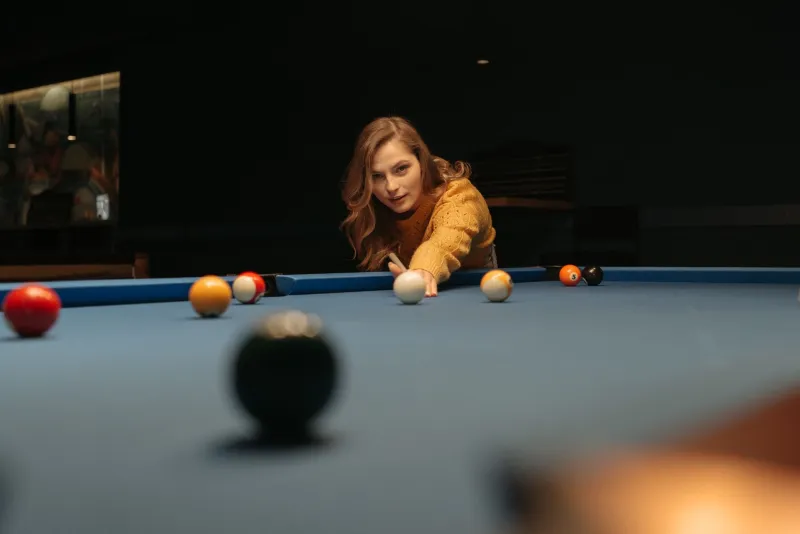
Step into any serious pool hall on a Friday night and you'll hear two games running at once. There's the one on the felt — careful positioning, calculated angles, the soft click of ball on ball. And then there's the other game, the one happening in the air between players. A well-timed comment. A knowing laugh. A raised eyebrow after a miscue. Welcome to the verbal side of billiards, where words can be just as dangerous as a bad break.
Banter is baked into pool culture the same way chalk is baked into the tip of a cue. But here's the question most players never stop to ask: does it actually work? Does talking mess with someone's game, or is it just tradition — the ambient noise of a sport that's always had a little hustle in its DNA?
The answer, it turns out, is way more complicated than a simple yes or no.
The Psychology of Distraction at the Table
Sports psychologists have studied the effect of verbal interference on fine motor performance for decades. Pool, unlike basketball or football, demands near-surgical precision. A fractional change in grip tension, a slight hesitation in the stroke — any disruption to your routine can cascade into a missed shot. And that's exactly where well-aimed words can do real damage.
Dr. Renee Harmon, a performance psychologist who works with competitive athletes in the Midwest, explains it this way: "When you introduce an external stressor — even something as minor as a sarcastic comment — you activate the brain's threat-detection response. For athletes performing high-precision tasks, that activation can pull cognitive resources away from motor execution just long enough to break the shot."
In plain terms? The right word at the right moment can make someone tense up, second-guess their line, or rush a stroke they'd normally take all day with.
But here's the flip side. Experienced players often report that trash talk actually sharpens their focus. Getting under someone's skin can backfire spectacularly if your target is the kind of competitor who gets better when they're annoyed.
Reading the Room Before You Open Your Mouth
Veteran players tend to agree on one thing: banter is a tool, not a reflex. Knowing when to deploy it — and who to aim it at — is its own skill set.
Marcus "Rack" Tillman, who's been running weekly leagues out of a hall in Columbus, Ohio for over fifteen years, puts it bluntly. "Young guys come in thinking they can talk their way through a match. The ones who've been around know better. You gotta read your opponent before you say a word. Some guys feed off it. You start jawing at them and suddenly they're in a zone. You just lit a fire under the wrong person."
The art of reading the room goes beyond just sizing up your opponent's mood. It involves understanding the social dynamics of the space itself. A casual bar league night operates on completely different unwritten rules than a regional tournament. In a relaxed league setting, friendly ribbing is practically expected — it's part of the social glue that keeps people coming back. But crack a joke during a tense semifinal and you might not just rattle your opponent. You might also turn the whole room against you.
Pool halls have a social ecosystem, and regulars know every layer of it. The banter that lands perfectly between two friends who've been playing each other for years can read as disrespectful coming from a stranger.
The Line Between Gamesmanship and Disrespect
This is where things get genuinely tricky. Every competitive environment has an invisible line between sharp gamesmanship and flat-out poor sportsmanship. In pool, that line shifts depending on the setting, the players involved, and even the history between them.
Good banter tends to be playful and situational. Commenting on a lucky roll your opponent got, or making a lighthearted remark about your own bad luck, keeps the energy light without targeting anyone personally. It's the kind of talk that makes pool fun and social — the reason people prefer a real hall over playing alone.
Disrespectful trash talk, on the other hand, goes after the person rather than the play. Mocking someone's mechanics, making comments about their background, or deliberately trying to humiliate them in front of others crosses into territory that most serious players find genuinely corrosive. And in close-knit pool communities, that reputation tends to stick.
Janelle Ortega, who manages a billiards lounge in San Antonio and has played competitive 8-ball for over a decade, has seen it go wrong plenty of times. "There's a guy at every hall who thinks he's being funny when he's really just being mean. And you know what? Nobody wants to play that guy anymore. He kills the vibe. The best trash talkers I've ever seen — they make you laugh even when it's at your own expense. There's a real skill to that."
Practical Tips for Playing the Verbal Game
If you want to sharpen your banter game without burning bridges, a few principles tend to hold up across competitive environments.
Know your audience first. Before you say anything, spend a few minutes getting a feel for your opponent's personality. Are they loose and joking around? Quiet and focused? A competitor who's locked in mentally is a bad target for distraction tactics — you'll likely annoy yourself more than them.
Keep it situational, not personal. Comment on what's happening on the table, not on the person standing behind the cue. "Tough roll" after a bad break is fine. Remarks about someone's form, intelligence, or background are not.
Mind your timing. A well-timed comment between shots can disrupt someone's pre-shot routine. But talking while someone is actually in their stance crosses a widely observed line of basic etiquette. Even in casual play, most people find that disrespectful.
Build mental armor of your own. The best way to neutralize someone else's banter is to have a rock-solid pre-shot routine that keeps you focused regardless of external noise. The players who are hardest to rattle aren't necessarily the most stoic — they're the ones who've practiced staying in their own head under pressure.
Know when to dial it back. If you can tell your words are genuinely upsetting someone rather than just nudging them off their game, it's usually worth pulling back. There's a version of competitive edge that builds the culture of the game, and a version that slowly hollows it out.
The Game Above the Felt
At the end of the day, pool has always been as much about people as it is about pockets. The banter, the ribbing, the carefully timed silence — it's all part of what makes a match at a real pool hall feel different from playing a video game or knocking balls around in your garage.
The verbal game isn't just gamesmanship. At its best, it's connection. It's two people who take the game seriously enough to test each other in every dimension available. That includes the psychological one.
Just make sure you know what kind of player is standing across the table before you decide to open your mouth. Because the sharpest shot in pool might not come from a cue at all.