Before You Sink a Single Ball: How the Break Shot Makes or Breaks Your Whole Game
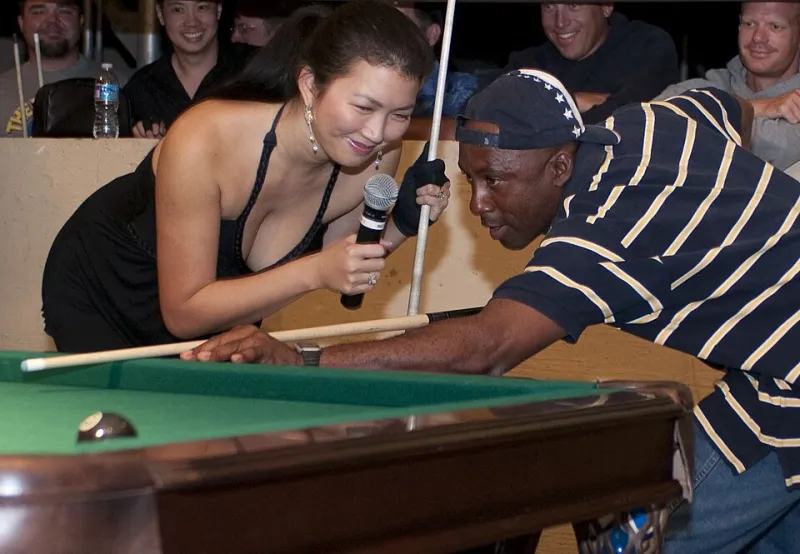
Photo: Jason Tross, Public domain, via Wikimedia Commons
There's a split second right before the cue ball rockets down the table that tells you everything you need to know about a player. Their posture, their breathing, the stillness — or lack of it — in their shoulders. That moment is the break shot, and at 7Ball Corner, we believe it deserves a lot more respect than most casual players give it.
So let's talk about why your very first shot isn't just a formality. It's the psychological and physical foundation of everything that follows.
The Mental Game Starts Before You Even Chalk Up
Professional pool players — from touring pros on the APA circuit to decorated nine-ball competitors — spend a surprising amount of time mentally rehearsing the break before they ever step up to the table. Sports psychologists call this "pre-performance routine," and it's the same concept that helps NFL quarterbacks visualize a play or NBA shooters mentally trace a free throw arc before the ball leaves their hands.
For pool, that mental prep usually involves a few core habits: slowing the breath, narrowing visual focus to the lead ball in the rack, and mentally "feeling" the shot before executing it. It sounds a little woo-woo, but the science backs it up. Research on motor performance consistently shows that athletes who visualize a movement pattern before performing it demonstrate better accuracy and power output than those who don't.
The psychological weight of the break also carries a social dimension. When you step up and absolutely crush a rack — balls scattering in every direction, a stripe or solid dropping clean — you send a message to your opponent. Confidence is contagious, and so is doubt. Pros know this. They use the break not just to spread the balls, but to establish mental dominance from the jump.
The Biomechanics: Power Without Losing the Plot
Here's where a lot of recreational players go sideways. They equate a great break with raw power, winding up like they're trying to drive a golf ball 300 yards. But uncontrolled force is actually your enemy at the break.
The ideal break is a balance of speed and precision — specifically, hitting the cue ball as close to center as possible (slightly below center for some controlled draw is fine) and driving it into the head ball with a clean, level stroke. The goal isn't just chaos. You want the rack to explode in a way that gives you options, not just a mess.
Biomechanically, the power in a break shot comes from your whole body, not just your arm. Your back foot acts as an anchor. Your hips rotate slightly through the shot. Your bridge hand stays firm. The cue moves through the ball — not at it — in a smooth, accelerating motion. Think of it less like a punch and more like a controlled explosion. The energy is generated through timing and body coordination, not by white-knuckling the cue and hoping for the best.
A common mistake? Lifting your head early to watch where the balls go. That tiny upward motion can deflect your stroke just enough to send the cue ball off-center, killing your spread and sometimes scratching — the worst possible start.
What the Pros Actually Do Differently
Watch footage of Shane Van Boening — arguably the most dominant American pool player of the modern era — and pay attention to his pre-break routine. It's almost robotic in its consistency. Same stance, same warmup strokes, same pause before the final delivery. That repetition isn't just habit; it's a psychological anchor that tells his nervous system "we've done this a thousand times, everything is fine."
For casual players, building a personal pre-shot routine for the break is one of the most underrated improvements you can make. It doesn't have to be elaborate. Three warmup strokes. One breath. Eyes on the head ball. Go. That simple sequence can dramatically reduce the anxiety spike that comes with stepping up to break in a competitive setting — whether that's a bar league match or a friendly money game with your crew.
Another pro habit worth stealing: vary your break position. Most beginners always break from the same spot on the head string. Pros adjust based on the rack, the table, and the game type. Breaking from slightly off-center can change the ball spread entirely, and knowing how to read that is a genuine skill.
Practical Tips to Upgrade Your Break Right Now
You don't need to overhaul your entire game to start breaking better. Here are a few adjustments any casual player can make this weekend:
Lower your bridge. A bridge that's too high creates cue wobble. Keep it low and stable for a cleaner, more consistent stroke.
Focus on the head ball, not the whole rack. Your cue ball needs to hit that lead ball flush. Everything else follows from that contact point.
Practice the break in isolation. Set up the rack, break, and then actually study the result. Where did the cue ball end up? Which balls moved where? Over time you'll start to see patterns in your own break that you can consciously adjust.
Slow down your warmup strokes. Rushing through your pre-shot routine is a sign of nerves. Deliberately slowing those practice strokes signals calm to your brain — even if you don't quite feel it yet.
Record yourself. Set your phone up at table level and record a few breaks. You'll immediately spot things — head lifting, elbow dropping, grip tightening — that you simply can't feel in the moment.
The Break as a Mindset, Not Just a Shot
At the end of the day, the break is a microcosm of your overall approach to the game. Players who treat it as routine tend to play routine pool. Players who treat it as an opportunity — to set tone, to build momentum, to get inside their opponent's head just a little — tend to play with more intention across the board.
Pool is a game of decisions layered on top of decisions, and that process starts the moment you chalk your cue for the opening shot. So next time you step up to the table at your local pool hall or even your home setup, take an extra second. Breathe. Commit. And make that first shot count.
Because in this game, the corner pockets are always watching.